
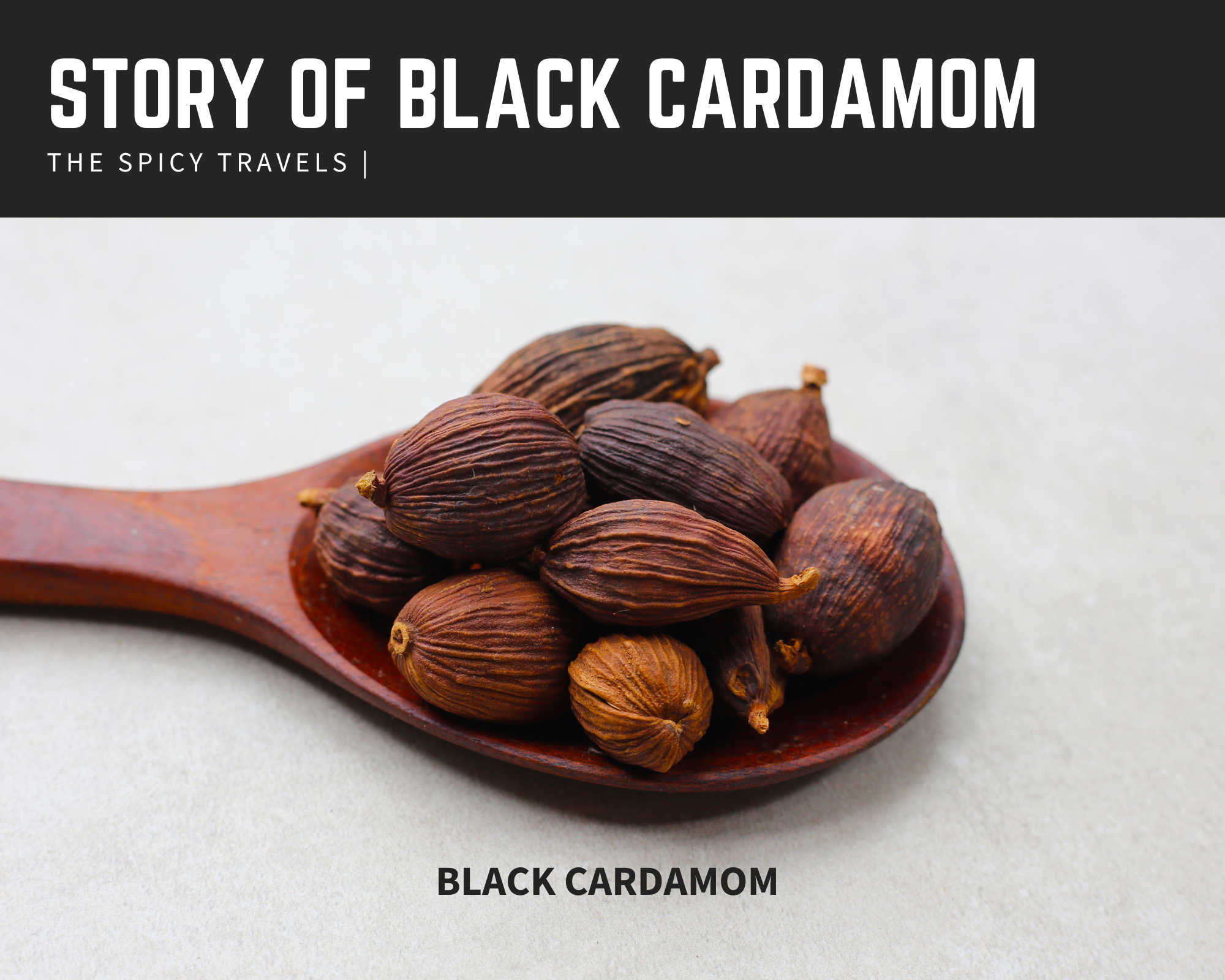
Black Cardamom: The Bold Spice
Origins and Botanical Facts
Black cardamom comes from the plant Amomum subulatum, native to the Eastern Himalayas, including regions of India, Nepal, and Bhutan. The spice is harvested from large seed pods, which are dark brown to black in color and contain small seeds. Unlike green cardamom, black cardamom has a distinctly smoky and earthy flavor due to the drying process over open flames, which enhances its aroma. In India, black cardamom is known as Badi Elaichi and is considered stronger and more pungent than green cardamom.
Historical Trade and Global Significance
Black cardamom has been traded for centuries, forming an important part of the Indian spice trade. Ancient traders transported it from the Himalayan foothills to plains and ports across India, and later, it reached the Middle East, Europe, and Southeast Asia. During the colonial era, European powers recognized its economic value, and black cardamom became a sought-after spice in global commerce. Unlike green cardamom, which was primarily used in sweets, black cardamom’s strong flavor made it indispensable in savory dishes and meat preparations, increasing its demand worldwide.
Role in Indian Trade
In India, black cardamom cultivation is primarily concentrated in Sikkim, Nagaland, and Arunachal Pradesh. It has been a significant export commodity, contributing to the livelihoods of local farming communities. Historically, Indian merchants exported black cardamom along with other spices such as black pepper, cinnamon, and cloves. Its trade strengthened India’s reputation as a “land of spices” and was often included in early spice trade caravans traveling to Tibet, China, and Central Asia.
Culinary Uses in Indian Cuisine
Black cardamom is essential in Indian cooking, especially in North Indian and Himalayan cuisines. Its smoky, intense flavor is perfect for savory dishes such as biryanis, curries, stews, and lentil preparations. It is often paired with other Indian spices like cloves, cinnamon, and bay leaves to create rich, aromatic masalas. In addition, black cardamom is used to flavor tea in certain regions, adding a deep, smoky note. Unlike green cardamom, which is primarily used in sweets, black cardamom is mainly reserved for hearty, savory dishes. Cooking enthusiasts attending cooking classes in Delhi at Khud Rang India can learn how to use black cardamom effectively in traditional Indian recipes, mastering both its flavor and aroma.
Medicinal Benefits
In Ayurveda, black cardamom is considered warming and is used to support digestion, improve respiratory health, and relieve cold and cough symptoms. It is also believed to stimulate appetite and strengthen the immune system. Black cardamom’s essential oils contain compounds with antioxidant and antimicrobial properties, making it not just a flavor enhancer but also a health-promoting spice.
Cultural Significance
Black cardamom holds cultural importance in Indian households and religious traditions. It is often used in festive cooking, wedding feasts, and ceremonial dishes. Its bold flavor represents strength and earthiness, symbolizing both nourishment and vitality in Indian food culture.
Modern Trade and Culinary Trends
Today, India remains one of the largest producers and exporters of black cardamom. Its production continues to support local farmers in northeastern India, and international demand remains strong. Black cardamom is now also embraced in modern culinary experiments, including fusion dishes and gourmet cooking. For anyone looking to explore the authentic taste of Indian spices, cooking classes in Delhi at Khud Rang India offer hands-on experience with black cardamom and other Indian spices, helping food enthusiasts connect with the history and flavors of Indian cuisine.
Conclusion
Black cardamom is more than just a spice; it is a bridge between history, trade, and culinary tradition. From its origins in the Himalayan foothills to its role in global trade and Indian kitchens, black cardamom has shaped both commerce and cuisine. Its bold, smoky aroma continues to inspire chefs, food enthusiasts, and culinary students, preserving the rich heritage of Indian food and Indian spices. Learning to cook with black cardamom through Khud Rang India’s cooking classes in Delhi provides an immersive experience, connecting history, culture, and flavor in every dish.






Leave A Comment